Haumai

He tells people he found God at nineteen.
That is technically true.
What he does not tell them is that he found whiskey at seventeen, women at fourteen, and shame long before either of those.
Every Sunday morning, he sits cross-legged near the front of the darbar hall [the main prayer hall in a Sikh Gurdwara], beside the old men with navy blue or bright orange turbans, their silver beards resting against tired chests.
He believes sinners should not hide in the back.
He arrives early enough for the stillness. Early enough to hear the shabads [hymns] breathe softly through the speakers before the gurdwara fills with perfume, coughs, restless children, and people dressed in borrowed holiness. It’s during the kirtan [devotional prayers] that he finds something closest to peace. Not because he fully understands it; he could speak Punjabi well enough, but Gurbani [sacred hymns] carried an older depth that often escaped him, poetic in ways everyday speech never was. But because the hymns bring back memories of sitting beside his father as a child. Or his thoughts are carried away by the hymns, allowing him to reflect on his sins and beg for forgiveness.
Still, by nightfall, he is drunk.
Not stumbling. Not loud. Not pathetic enough to let people notice. Never that. He despises sloppy men with the kind of disgust a man secretly afraid of resembling them can possess. His drinking is quieter than theirs. More disciplined. Ritualistic almost. Two fingers of bourbon after work. Another while staring at the image of Guru Nanak [spiritual leader] hanging above the kitchen table. Another because the apartment grows too silent after midnight, and silence has a way of making unwanted thoughts louder. He drinks, carefully, as though control could purify the act. That is how he lies to himself. He does not reject the sin outright; instead, he reshapes it into something polished, something almost elegant. Something private. Sometimes he wonders whether shame can become a habit the same way drinking does. Whether a man can repeat the same destruction so many times that guilt itself begins to feel comforting. Familiar. He tells himself good men drank too.
He tells himself even saints had weaknesses.
Then he hates himself for bargaining with Waheguru [God] like a lawyer defending a guilty man. He tells himself tonight will be the last drink. The last lie. The last time. He apologizes once while staring at the framed image of Guru Nanak hanging above the kitchen table. Then again a few minutes later. Then once more without even realizing he has repeated the same prayer word for word. Nevertheless, a man remains a man. He cheats in patterns he prefers to call accidents because accidents sound temporary, and temporary things are easier to forgive. But there is nothing accidental about the way he moves toward loneliness whenever it appears in another person’s eyes.
It has become a habit of his.
Or perhaps worse than a habit.
Familiarity.
A woman from work whose lipstick stains his collar while a cross hangs from his neck. She didn’t care about him, nor did he care about her. Or a stranger lying next to him in bed whose name whose name dissolves from memory before morning prayer. Or a married woman who cried afterward while he sat on the edge of the bed staring at his hands as though they belonged to someone else.
He always prays afterward.
That is the strange thing.
Not performatively. Not even out of fear alone. Why would he fear? He prays because he wants to pray; he needs to pray. There is this absurd urge inside him that never leaves him alone. In order to calm it down, he prays as though his life depends on it. Sometimes still smelling of perfume and sweat, sometimes kneeling on the ground beside the image of Guru Nanak with tears burning down his face. Other times in dark parking lots before driving home. In locked bathroom stalls. In empty elevators after leaving another hotel room.
His voice breaks when he speaks to Waheguru. He asks for forgiveness with such sincerity that, for a moment, even he believes he can become clean again.
But by the next week, he is back inside another dim room, another bar glowing beneath neon lights that make everything look artificial along with beautiful, like a false heaven. He notices the woman after she notices him first. A glance held half a second too long. Boom. Then the familiar smirk. Then the softened eyes that invite conversation before a single word is spoken.
Just like that, the ritual begins again.
It is never about the women themselves; their names, their bodies, or even desire in its simplest form.
It is about the transformation. About becoming someone unrecognizable for a few temporary hours. Someone untouched by guilt or memory or prayer. Someone capable of moving through the world without carrying the unbearable weight of himself everywhere he goes.
Alas, the illusion never lasts.
He cannot understand why repentance changes nothing.
He has read obsessively on the subject of theology. Augustine. Dostoevsky. Ecclesiastes. Tolstoy. And later about his own faith, anything translated from Punjabi into English, anything that attempted to explain Sikhi, suffering, and the strange contradictions buried inside human nature. Page after page until the corners softened beneath his fingers. Until entire passages lived inside his memory more vividly than conversations with real people ever did.
He once underlined passages about haumai, about the sickness of ego that turns a man against himself. About lust, about attachment, and the mind becoming its own prison. Sometimes, late at night, he rereads the same paragraphs while bourbon burns in his throat, searching them for a sentence capable of explaining why self-awareness had never once been enough to save him. And that one line follows him everywhere like a ghost:
Haumai is a deep disease, yet its cure also lies within it.
That verse terrifies him because it feels less like scripture and more like someone reading his diary aloud.
No line has ever described him more perfectly.
Or condemned him more completely.
People love him.
That is another part he cannot reconcile.
Old women at the gurdwara call him kind. Men shake hands firmly after prayers as though goodness can be passed between palms. Friends trust him with their secrets because he listens like confession itself is sacred. He gives money away too easily. He once sat six hours in a hospital waiting room for a friend whose mother was dying. He remembers birthdays. He helps strangers push cars out of snowbanks. He volunteers at the gurdwara helping young boys prepare for the future, teaching them discipline, humility, as well as prayers with sincerity.
None of this is fake. He means it.
At the end of day, he wonders whether he loves being seen as good more than he loves goodness itself. That thought sickens him. Perhaps even his kindness is infected with haumai. Perhaps he enjoys the admiration hidden behind grateful smiles. Perhaps guilt has become another vanity.
Another way of feeling special in his suffering.
The reflection staring back at him is still handsome in the way worn things sometimes become handsome with age. Tall enough to carry presence without trying. Broad shoulders softened slightly by time. Wavy salt-gray hair falling carelessly across his forehead. Thick eyebrows streaked with silver. A neat beard trimmed with deliberate precision
And the eyes.
Always the eyes.
Dark brown, heavy with exhaustion, yet softened by the kind of sadness that makes people trust him too quickly. Women often mistook that sadness for gentleness. Men mistook it for wisdom.
That was always the problem. People forgave eyes that looked tired. He once joked that his beard carried all the strength while his eyes were made to capture hearts. Women laughed when he said things like that. He knew they would. And maybe that was the ugliest thing about him. Not the drinking, not the adultery, but the fact that some part of him understood what to say. Then the illusion breaks. In the reflection, he no longer sees a man. Only a farce. A jester dancing toward the tragedy of his own making.
What’s taking you so long?” she called out loudly.
He stepped back into the bedroom and saw her lying half-naked across the bed beneath the amber light, her bare skin glowing against the dark sheets, a faint smile resting at the corner of her lips as though she knew he would come back.
Her name was Simran.
He first noticed her at the gurdwara months earlier. She had been standing quietly near the langar hall speaking to an older woman, her hands folded politely in front of her while loose strands of dark hair escaped around her face. There was nothing dramatic about the moment, and possibly that was why it unsettled him. She was beautiful in a way that made him lower his eyes instead of hold them. Dark brown eyes framed by long lashes. Lips the color of ripe pomegranates. A softness to her expression that seemed untouched by the world despite the exhaustion resting underneath it. Her figure was generous and impossible not to notice
A brother from the gurdwara introduced them a week later. Simran was new to the country and looking for people who could help her settle into life here. Someone to explain the city. Someone to speak Punjabi with when the homesickness became too heavy.
He told himself that was all it was in the beginning.
Just kindness. Nothing more or less.
However, a man remains a man. Men like him understood loneliness quickly, especially in women trying too hard not to show it. He knew when to listen instead of speak. Knew how long to hold eye contact before looking away. Knew that people revealed themselves more easily when silence was made to feel safe
What started as harmless text messages became small favors. Grocery runs. Long conversations inside quiet coffee shops after evening prayers. Then came the late-night phone calls that stretched past midnight, both of them lingering on the line long after the conversation itself had ended.
Sometimes he would wait an hour before replying to her messages even while staring directly at the screen. Sometimes he spoke with calculated gentleness; the kind that made concern feel close to intimacy. And each time she began pulling away slightly, he somehow knew the exact words capable of making her stay.
Looking back now, he could no longer tell when concern became desire. Only that by the time he noticed the change, it already felt inevitable.
He pours himself a drink before lying beside her, pulling her gently against his chest. Simran traces absentminded circles through the hair on his chest while the light from the hotel lamp softens the room. For a while, neither of them speaks. They remain there together, trapped inside separate thoughts neither of them fully wishes to confess.
The silence breaks. It is always Simran who breaks it.
She speaks about her mother’s kitchen in Ludhiana as though memory could keep her warm. About the smell of chai simmering before sunrise. About waking up to the sound of her father clearing his throat before heading to work. Sometimes she laughs quietly while describing small things that should not matter as much as they do now; steel plates clattering together, monsoon rain against the balcony, her mother yelling at her for leaving wet footprints across the floor.
Then her voice changes as she removes Kara [steel bangle worn by initiated Sikhs].
She speaks about calling home at three in the morning because of the time difference. About lying to her parents, telling them Canada is beautiful, easy, and kind. About pretending to her husband that she is not lonely because lonely women frightened men.
Simran is not naive, however. Within ten minutes of meeting him, she understood he was not a good man. Truly good men did not carry sadness that heavily in their eyes. Truly good men did not drink the way he drank. And look at women like they were both salvation and punishment.
But damaged people recognized each other. Eye to eye. And what frightened her most was not his sadness. It was how peaceful she felt beside it.
He caresses her slowly while she speaks, listening with an attentiveness that almost feels holy. Sometimes he listens to the rhythm of her breathing. That was always the dangerous thing about him. He listened. There was kindness in him, real kindness, but tangled so tightly with selfishness that even he could no longer separate one from the other.
“Do you ever feel guilty?” Simran asked.
He lets out a small laugh, “About what?”
“About any of this.”
The glass rested loosely between his fingers. For a moment, he watched the liquid instead of her. “I think guilt is probably the only reason I’m still human.”
Simran smiled faintly at that. She traced the edge of his kara with her thumb.
“You pray after, don’t you?”
His silence answered first. Then, “every time.”
She nodded as though she had expected it. “I could tell.”
“How.”
“Men who feel nothing don’t look at people the way you do afterward.”
“And how do I look at people?”
“Like you’re apologizing for existing.” She whispered.
The words settled between them. Outside, snow tapped against the hotel window. He took another sip before speaking. “You should hate me.”
Simran shrugged lightly. “You think too highly of yourself.”
Despite himself, he chuckled.
She rested her head against his shoulder again. “I don’t think you’re evil,” she murmured. “I think you’re just… weak in the same places you’re soft.”
“That sounds worse.”
“It probably is.”
Another silence followed. Comfortable this time. Dangerous because it was comfortable. Then Simran spoke again, her voice barely above a whisper.
“Do you think Waheguru gets tired of forgiving the same people?”
His chest tightened. He stared ahead at the dark ceiling for a long time before answering.
“I think,” he paused then said, “people get tired of asking before God gets tired of listening.”
Simran looks away, contemplating something. He gently pulls her back toward him and looks directly into her eyes before speaking.
“Your eyes… Simran, they don’t just look at me, they undo me. Like something soft and dangerous. Like silence before a storm. Like a dream I was never meant to wake from. There is a whole world inside them, and somehow, every time you look my way, Simran, I forget the one I live in. Your gaze does not pass through me. It stays. It lingers. It makes my heart remember things my mouth was too afraid to say. And maybe that is why I cannot look away. Because in your eyes, I do not just see beauty. I see the place where I would…willingly fall.”
He grips her gently by the hair, lifting her head toward him before locking his lips with hers. Simran leans into the kiss immediately, soft at first, yet filled with urgency. The kind of kiss that feels less like desire and more like surrender. The whiskey on his breath mingles with the faint scent of her perfume. Warm. Intoxicated. The rest of the world seems to disappear around them.
His hand slid against the curve of her waist, warm skin meeting colder fingertips before moving toward her neck. Simran inhaled when his lips brushed against her skin, her fingers tightening instinctively in his hair. Then he lowered himself before her. There was something almost reverent in the way he touched her, as though desire along with devotion had become tangled together beyond recognition. His hands moved along her thighs, drawing her closer, softened every movement into warmth. She trembled beneath his attention.
He was not rough. He was patient. He looked at her like a starving man trying not to devour something sacred.
Simran’s breath caught as he kissed the inside of her thighs slowly, deliberately, until thought itself became difficult. The room filled with uneven breathing, quiet moans, the sound of winter wind brushing faintly against the hotel windows. He lost himself there. In her warmth. In the taste of whiskey still lingering between kisses.
In this dangerous intimacy of making another person feel wanted so completely that, for a moment, loneliness disappeared between them.
Her hands gripped his shoulders as pleasure overtook her in waves, legs shaking beneath the intensity of it. He held her carefully through every trembling breath afterward, forehead resting against her skin as though grounding himself there. And somewhere deep inside him, beneath lust as well as guilt alike, came the terrible realization that tenderness ruined him far more than desire ever could.
He stood slowly while Simran remained at the edge of the bed; flushed and breathless. Her hair fell loosely around her shoulders, and for a moment neither of them spoke. The silence between them had become its own kind of intimacy.
“Come here.”
There was something dangerous about the calmness in his voice. Certainty.
Simran looked up at him. All she could see were the broad lines of his shoulders, the strength in his chest softened by dark hair, the faint tension in his jaw as his teeth caught briefly against his lower lip. Even standing there half-undressed, there was still something composed about him. As though restraint had become part of his seduction.
Simran looked up at him again before sliding from the bed onto the carpeted floor, her eyes never leaving his. The city lights flickered faintly through the window behind him, casting his brown skin in shades of shadow and gold.
He exhaled quietly, running a hand through her hair as though trying to steady something restless inside himself. She rested her hands lightly against his waist, her touch lingering, unhurried, more affectionate than either of them wanted to admit. For all the guilt that followed them, moments like this almost felt gentle.
And perhaps that was what made them so dangerous.
The clock ticks, ticks, ticks until the room fell into silence except for the sound of their breathing gradually returning to normal. Snow continued drifting beyond the hotel windows, pale against the darkness of the sleeping city. Simran lay tangled in the sheets while he sat at the edge of the bed with his head lowered, forearms resting against his knees.
Her flushed skin.
Skin to skin.
The half-empty bourbon glass.
The kara still hanging from his wrist.
For a while, neither of them spoke. There was always a strange grief that arrived after intimacy, as though reality waited patiently outside the door for them to finish pretending. Simran watched him from the bed. “You’re leaving already?” She questioned.
He rubbed a tired hand over his face. “If I stay too long, this starts feeling real.”
The words lingered between them.
She looked away first.
He reached for his clothes scattered across the floor, but paused when he heard her voice again.
“Do you ever wish you had met me differently?”
He turned toward her.
In another life, he thought. One where neither of them belonged to someone else. One where loneliness had not hollowed them into people willing to borrow warmth from strangers. One where prayer did not follow desire like a shadow follows fire.
Instead he gave her a tired smile.
“We probably wouldn’t have noticed each other.”
The honesty. That hurt her more because it was true.
“You know what the worst part is?” she asked.
He said nothing.
“I still prayed before meeting you tonight. I don’t know why. Can you stay over? Just tonight. I enjoy having you close at night,” her voice carried a gentle plea.
“I have plans for tonight,” he replied without much hesitation. She pressed her lips together, rolled her round brown eyes, and sighed exasperatedly. Simran pulled the blanket closer against herself while he buttoned his shirt.
“Aren’t you worried your wife will find out?”
“That’s the second of my concerns.”
“What’s the first one?” Her narrow eyes searching his face.
“To fall in love.”
And before leaving, he walked back toward the bed, pressed a lingering kiss against her forehead, softer than anything else they had done that night. That tenderness felt the most sinful part of all.
That same night, as he walks out of the Marriott hotel and into the cold, he wonders whether goodness exists beside corruption, or if every decent thing he does is merely camouflage for the ugliness beneath it. Why had Waheguru made man with such contradictions, such hunger, that human nature leads him toward pride, greed, lust, anger, envy, and sloth?
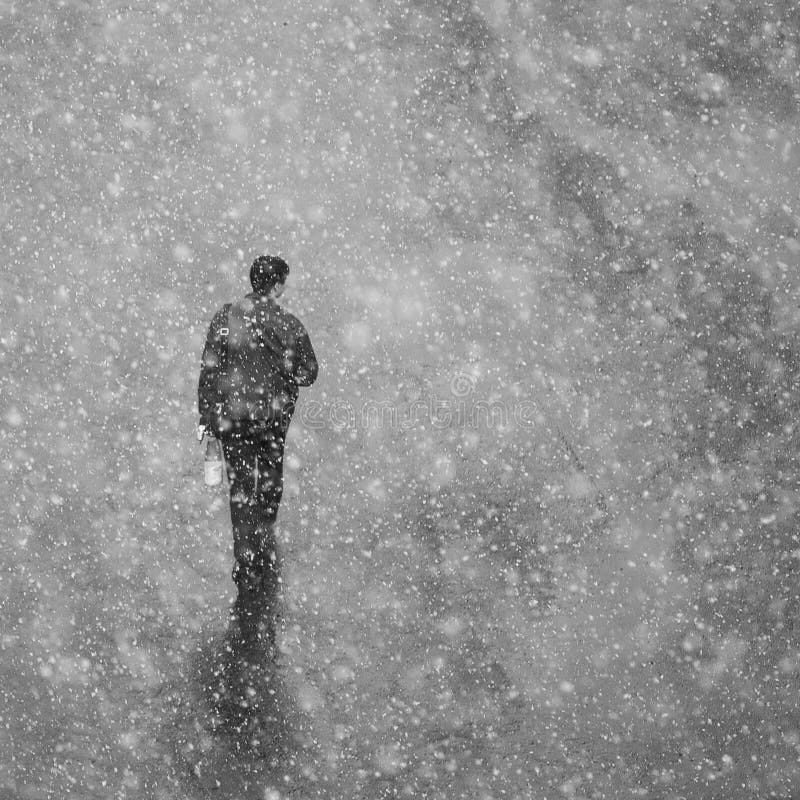
Snow falls lightly through the yellow glow of streetlights.
He questions Waheguru after too much whiskey, after intimacy with a woman who made him forget himself for a few fragile hours. Why did Waheguru make a man like him? What was the point of creating a soul forever divided against itself ? He looks behind, beyond the revolving doors of the hotel lobby, Simran still exists inside that room. The unmade bed. The half-empty bourbon glass on the nightstand. Her body still warm beneath the sheets. But already she feels less like a person and more like evidence.
He walks without deciding where he is going.
Why had Waheguru created men with such hunger in them? Why create desire only to spend centuries warning against it? Why give a soul the ability to recognize goodness while filling the body with appetites determined to betray it?
The questions arrive one after another with no answer following behind them.
He thinks of prayer. Of lust. Of ego. Of the strange possibility that those impulses are born from the same wound.
At the next intersection he realizes, without remembering when the decision was made, that he has turned toward the downtown gurdwara. The streets are empty now. Somewhere in the distance, a siren moves through the city and disappears again.
By the time he reaches the gurdwara, his hands have gone numb from the cold. The building is dark. Locked. Complete silence except for the wind moving faintly against the Nishan Sahib [the sacred, triangular flag of the Sikh] outside.
He sits down on the snow-covered steps and suddenly begins laughing to himself. Quietly at first. Then harder. Because the absurdity of his life has become impossible to ignore.
A praying man who cannot stop sinning.
A sinner who cannot stop praying.
The snow continues falling around him; soft, indifferent. He stares at the dark windows of the gurdwara, suddenly he remembers being seven years old, sitting beside his father during kirtan, half-asleep against his shoulder while the hymns echoed through the hall. Back then, holiness had seemed simple. Something clean. Something reachable. He looks up at the stained glass above him, dark, and whispers. “Why do I keep doing this?”
The wind answers first. Then silence.
Now even Waheguru feels distant behind locked doors.
And somewhere deep inside himself, beneath lust, whiskey, loneliness, and guilt, he feels another truth moving beneath all the others; he does not want to be saved. That realization frightens him more than hell ever could. Because if he truly hated the sin, would he not leave it behind. But he loves parts of it.
He loves the warmth of bourbon spreading through his chest like false mercy. Loves the brief oblivion of another body beside his own. Loves destruction while mourning it at the same time. He is both the wound and the knife entering it. That is the paradox.
He once confessed to a Granthi [principal religious official] who replied gently, “The human soul is often at war with itself.”
But that answer feels too poetic. Too easy.
War implies two sides fighting.
Inside him, the sides often hold hands.
Slowly by slowly, the snow gathers on his coat. He wonders how many apologies a soul can make before they become another form of habit. Then another thought arrives, quieter than the others, but far more dangerous. Perhaps there was never a contradiction inside him at all. Perhaps the praying man and the sinner had been the same person. Perhaps he doesn’t want to be saved.
For the first time that night, he stops asking Waheguru for forgiveness.
He simply sits there in silence while the snow continues falling around him, covering the steps, covering the city, covering him too, little by little, as though the world itself were trying to erase the evidence that he had ever been there at all.
Outside the locked doors of the gurdwara, he whispers into the cold:
“Satnam Waheguru. Satnam Waheguru. Satnam Waheguru.”
He experiences the uncomfortable sensation that someone has been watching him for years. Not Waheguru. Nor judgment exactly. Something worse.
Himself.
Not the man he shows people. Not the praying man. Not the kind man. Not the wounded man women mistake for gentleness.
The other one.
The one that exists in silence after the whiskey fades and the hotel rooms empty. The one that watches every apology leave his mouth already knowing he will return to the same sins again. And he understand, which makes the cold feel deeper somehow. He has spent years believing he was running from corruption, when in truth, he has been circling it carefully, feeding it just enough to keep it alive.
The realization settles inside him. Because the face he keeps trying to escape is no longer chasing him anymore.
It is waiting for him.
Patiently.
Like it already knows he will come back.